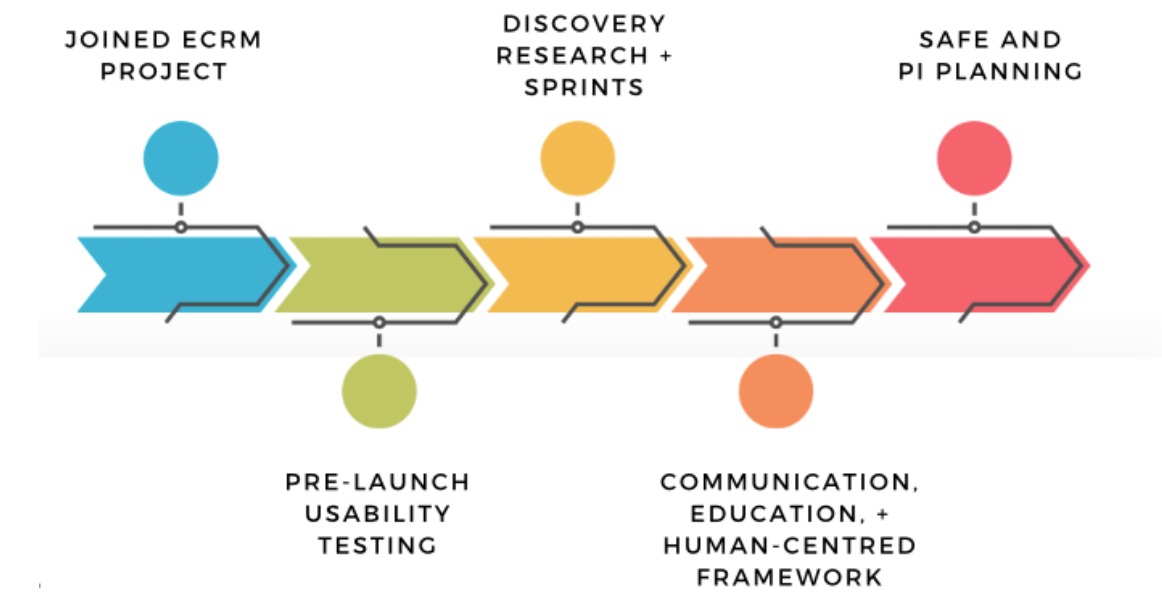
ECRM UX Project TimelineLaunch

ECRM

UX LeadershipUX ResearchUX DesignAccessibilityContent Strategy

Leading User-Centred Design for an org-wide Salesforce CRM Tool at CIBC

OVERVIEW

The Setting

Imagine you're a Financial Advisor at CIBC. A client, Ms. Anwar, calls out of the blue with $50k to add to your portfolio of funds managed. Amazing! So of course, you pull up her file to make sure you’re completely up to date with her entire CIBC financial picture, right? But what if your system only showed you bits and pieces? What if to find that whole picture you had to go on a scavenger hunt between 6 to 7 disjointed legacy applications from what feels like the Reagan era to find a record of a stinking mortgage payment?

In the meantime, you sense Ms. Anwar's impatience mounting. And your frustration, frankly, is not that far behind.

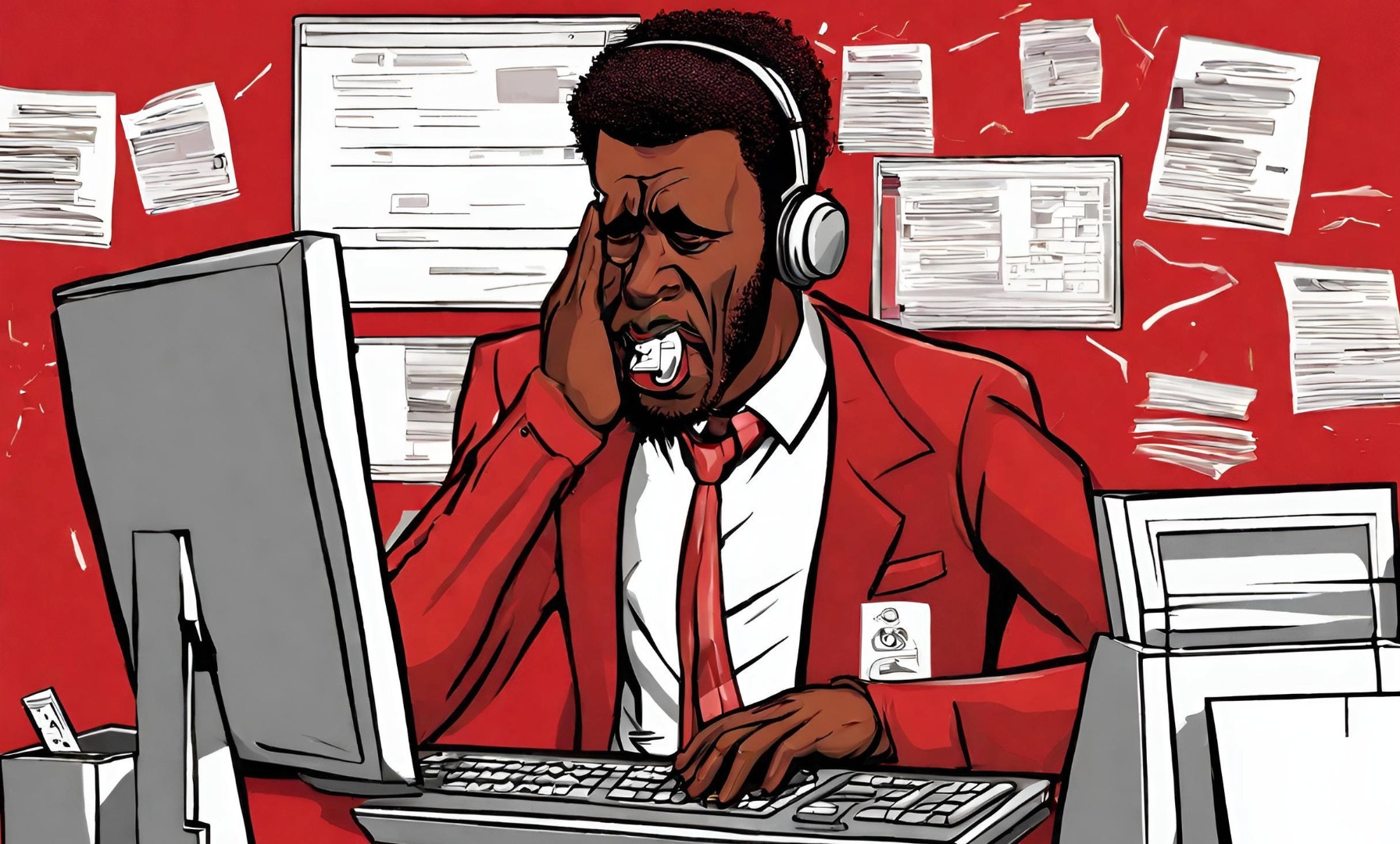
Oh my glitchy goodness, no! Your computer froze. You have to restart. Ms. Anwar's got to go. 🤦🏻‍♂️

She'll call back.

You think.

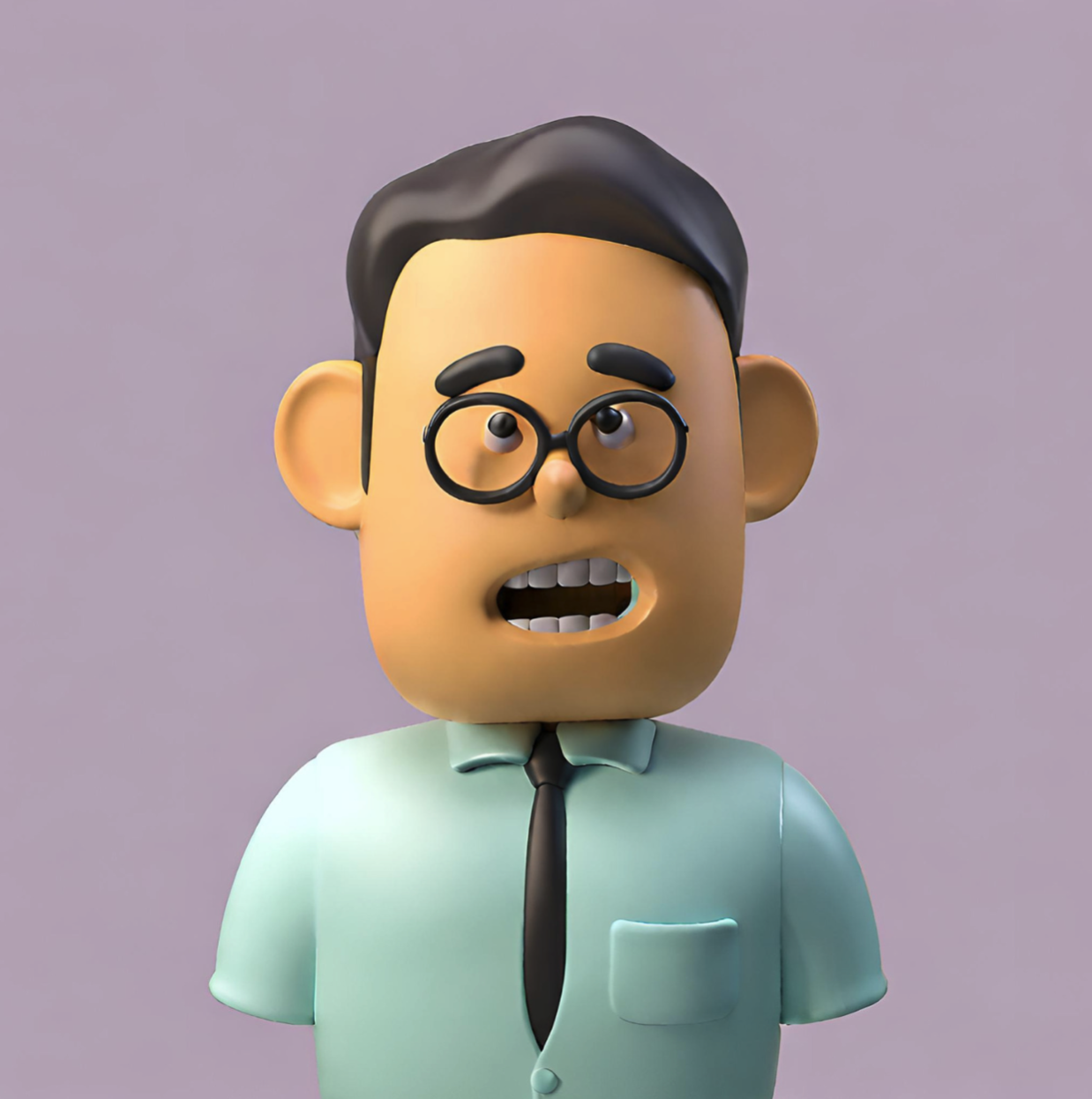
Mortified Employee

Enter ECRM: the Enterprise Client Relationship Management Tool

The ECRM project aimed to create one, singular Salesforce SaaS-based client relationship management tool org-wide to unify all the many various CRM systems that were being used by different departments within the bank.

Problem Space: A Maze of Applications

The bank's frontline staff was navigating through multiple, disconnected, antiquated applications and CRM platforms—often needing way too many tools to perform otherwise simple tasks—leading to inefficiencies and poor user and client experiences.

The goal was to simplify work processes for frontline staff and to centralize all CRM systems along with a heap of other functionalities into one platform, thereby:

  • reducing the number of applications staff need to do their job
  • improving their experience and efficiency
  • streamlining client relationship management
  • decommissioning old, inefficient systems that otherwise cost a fortune to maintain.
Employee navigating the maze

My Role 🙋‍♂️

As a UX Team Lead at CIBC, I led a brilliant and multidisciplinary team of 10+ UX professionals in transforming the perception of UX within our project and business unit during the creation of a new, organization-wide Salesforce CRM tool called “ECRM". I donned many a hat during this journey from UX/UI Designer to UX Research Lead to the all-encompassing ECRM UX Team Lead. This experience demonstrates my ability to drive UX strategy to deliver user-centred solutions across various lines of business, and various sub-disciplines within the UX field. All while scaling a UX project team by 400%! Heyooooo! 🙌

I made it my goal every day to create a supportive environment that championed the creativity, career growth, well-being, and collaboration of this team.

LEADERSHIP AND PEOPLE MANAGEMENT PRINCIPLES

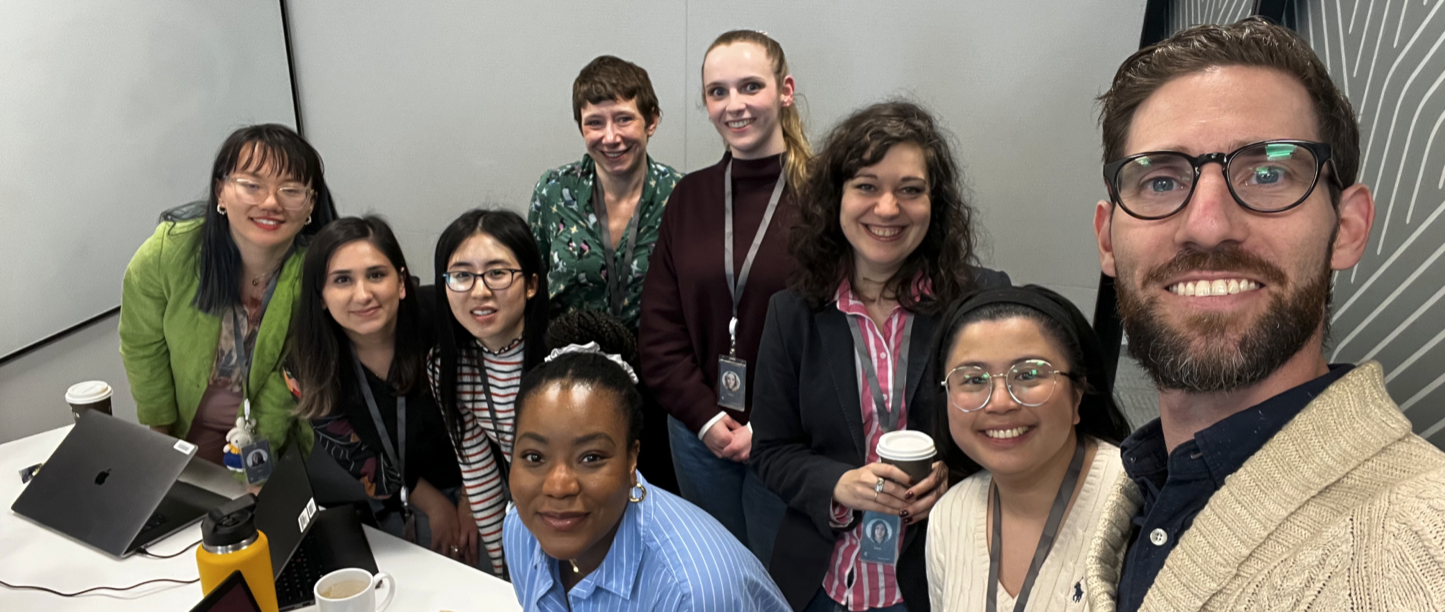
The Dream Team

People First Leadership: I’m a people person. I’m passionate about helping people grow and enjoy their lives as professionals and as people. I was able to follow the examples set by tremendous leadership in that regard and consider it a privilege whenever I’m in a position to embrace and steward this philosophy of genuine care and passion for the well-being of our team members.

Collaborative growth: From collaborative work prioritization workshops, to weekly show and shares, to coffee chats, to formal recognitions, and of course to karaoke nights, I enabled a myriad of activities aimed at fostering both personal growth and team cohesion.

Team Synergy: Through the UX process flow, I cultivated an environment where the team functioned harmoniously. Regular interactions between UX Research, UX Design, and POs fortified team cohesion, ensuring every member contributed meaningfully.

Leadership Values: Throughout the project, I championed:

  • Empathy: Prioritizing a deep understanding of users, ensuring designs were user-centric. This also applies to stakeholders.
  • Collaboration: Encouraging teamwork between research, design, and other stakeholders for richer solutions.
  • Communication with Candour and Courage: Upholding transparency in discussions and decisions, even when they were challenging, and fostering an environment where team members felt empowered to voice their thoughts and concerns with honesty and confidence.

BUT REWIND: The "Starting" Line

The Initial Promise and Expectations

Stepping into the ECRM landscape, my initial assumption was that a project of this magnitude, with such vast expertise behind it, would have a clear and effective vision for the role of UX.

I expected product leaders:

  • to be very familiar with the nuances and value of UX Research and Product Design
  • to understand the efforts and processes required to conduct this work in an impactful manner
  • to have space in project timelines for early, generative implementation of strategic UX work

Bit of a Speed Bump

Turns out they weren't there quite yet. And to be fair, stakeholders were juggling such wildly tight executive timelines I empathized and couldn't really blame them. No doubt a challenging way for us to start, but I felt in time, with education and built trust, we'd sort out all the kinks. Nevertheless, we were initially just 2-3 UX resources brought into a sea of hundreds of stakeholders, and our introduction into the project came late in the game. We had missed the chance of being integral contributors at the start of the product lifecycle, and found ourselves arriving towards the end of it, reviewing designs already created by a third-party vendor. Instead of early strategic involvement, our role was reactive; provide "on-the-spot UX/UI Design heuristic evaluations," as well as evaluative usability testing.

Oh, and the national launch was mere months away.

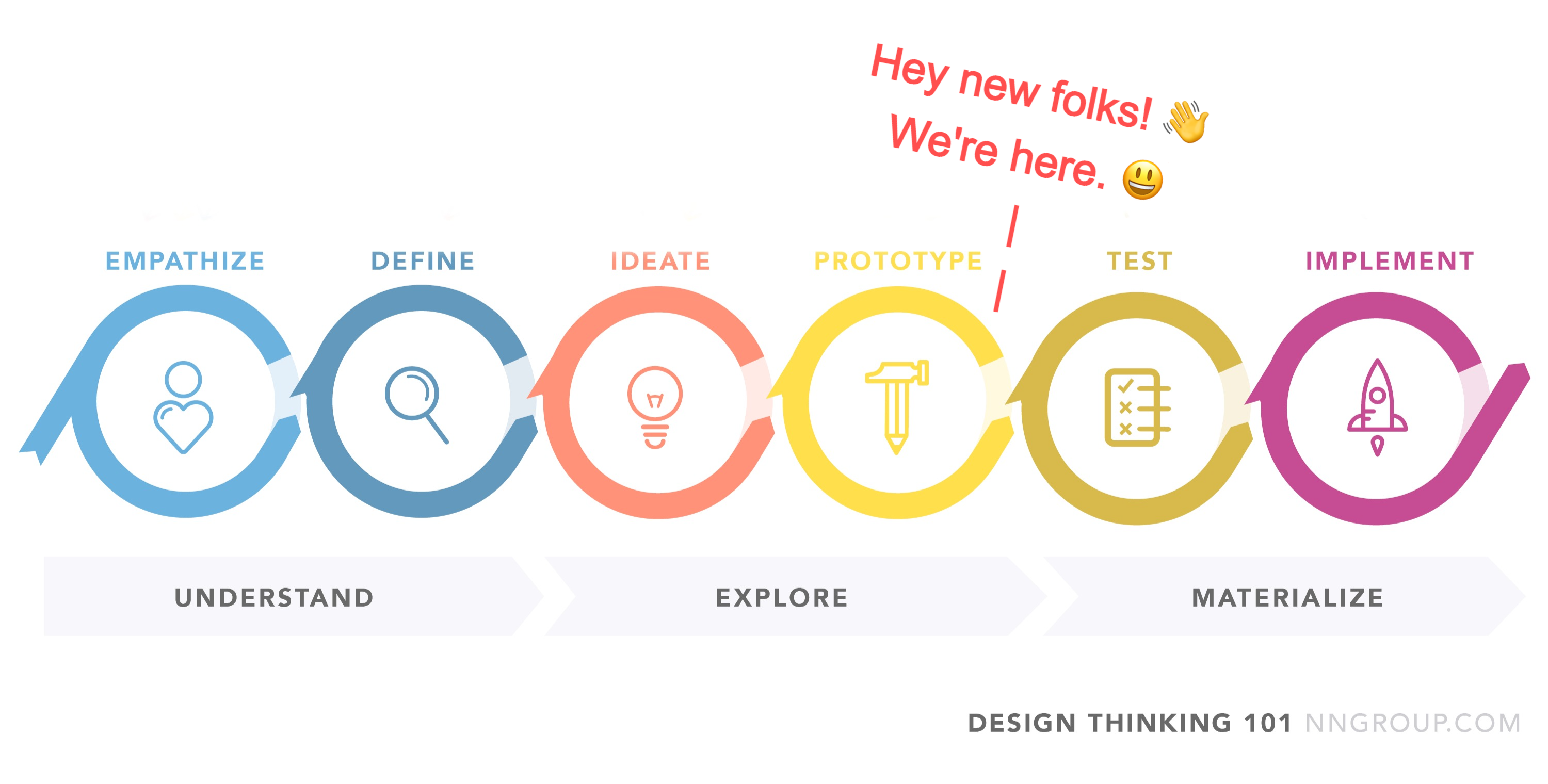
Design Thinking Process

UX CHALLENGES

  • Under-resourced
  • Late Entry + Misplaced Usage
  • Time Constraints and Misunderstanding of UXR Value
  • Limited Influence
  • Integration of Research Insights
  • “Salesforce Work Doesn’t Need UX Designers”
  • Salesforce UI inconsistent with internal UX Design System
  • Collaboration
  • Sequencing of All UX Work

"The More You Know"

It certainly wasn't that stakeholders didn't value UX; they absolutely did. But a gap in knowing the breadth of what we could bring to the table also existed. The time for strategic UX Research was not yet accounted for, and UX Design timelines were never realistic. Once we saw the forest for the trees, we realized if this was to be improved, it would fall on us to put the wheels in motion. And so out we set to socialize advocation and education for better UX processes, to nurture cross-functional relationships to expand our scope of influence, and to work to earn the trust of stakeholders such as product leaders, Product Owners, Business System Analysts, and Scrum Masters, to name just a few.

But first, before we'd be able to implement all of the above, we had a launch looming. It was time to roll up our sleeves and show our worth through showing our work...

PRE-LAUNCH "UAT" USABILITY TESTING

We Were Where We Were 🤷‍♂️

The reality was, this product was going full-scale launch sooner rather than later and if we wanted to have any impact before it did, it was going to have to be through evaluative usability testing in the User Acceptance Testing (UAT) sandbox environment. The goal was to rigorously test the usability of the system and provide UX/UI Design recommendations that could either be quickly implemented before launch, or added to the product backlog for future prioritization.

Research Planning and Execution

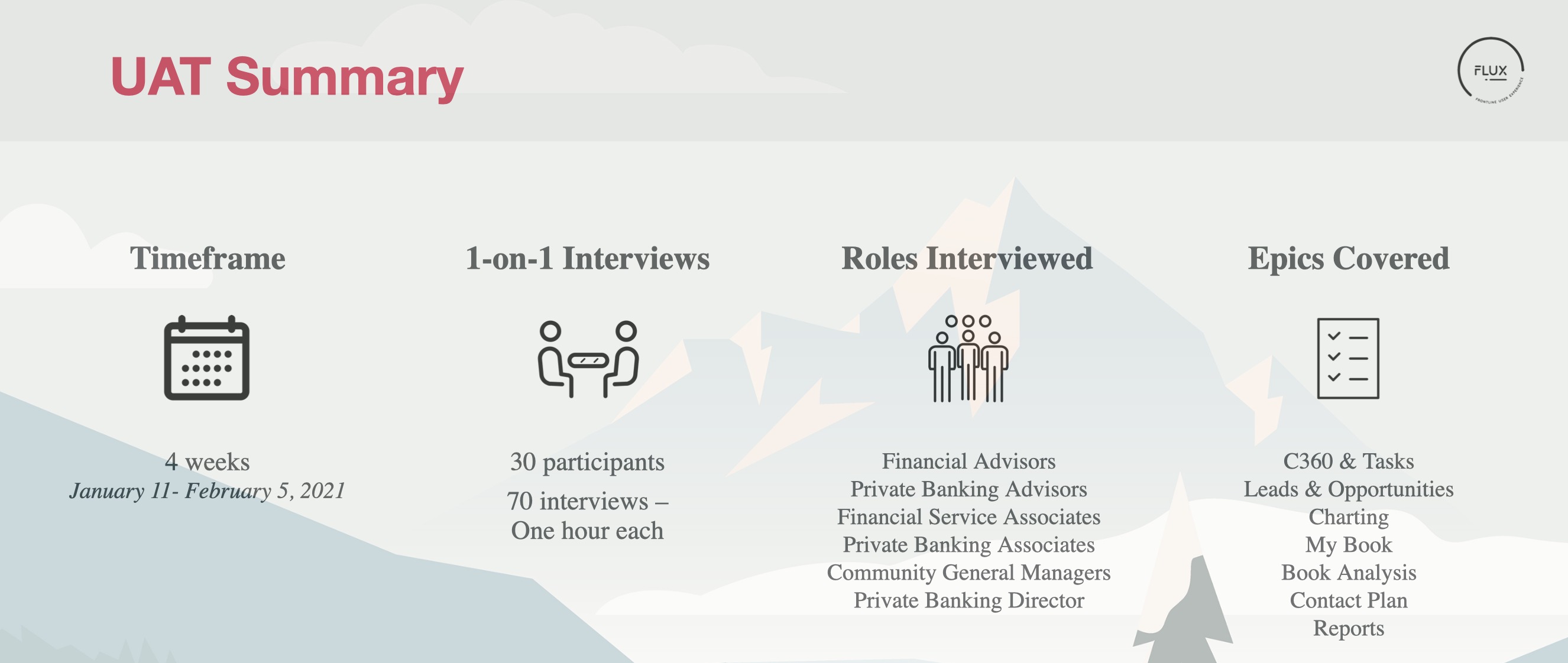
  • Research Plan: Crafted a research plan that included 12 rounds of 1-on-1 interviews with 30 participants over four weeks, evaluating designs covering at least 7 product epics
  • Conduct Studies: Executed the UAT testing, employing qualitative research methods like 1-on-1 interviews and contextual inquiries through the use of open-ended questions and direct observation of hypothetical scenarios and tasks

Synthesis, Reporting, and UX/UI Design Recommendations

  • Findings: Collected and analyzed data and synthesized into key themes to discern top usability pain points
  • Reporting: Formulated a research report, which was shared with cross-functional stakeholders, to drive product decisions
  • UX/UI: Based on key identified themes and issues, presented UX/UI Design recommendations to simplify workflows, mitigate confusion, streamline task completion, and enhance overall user experience

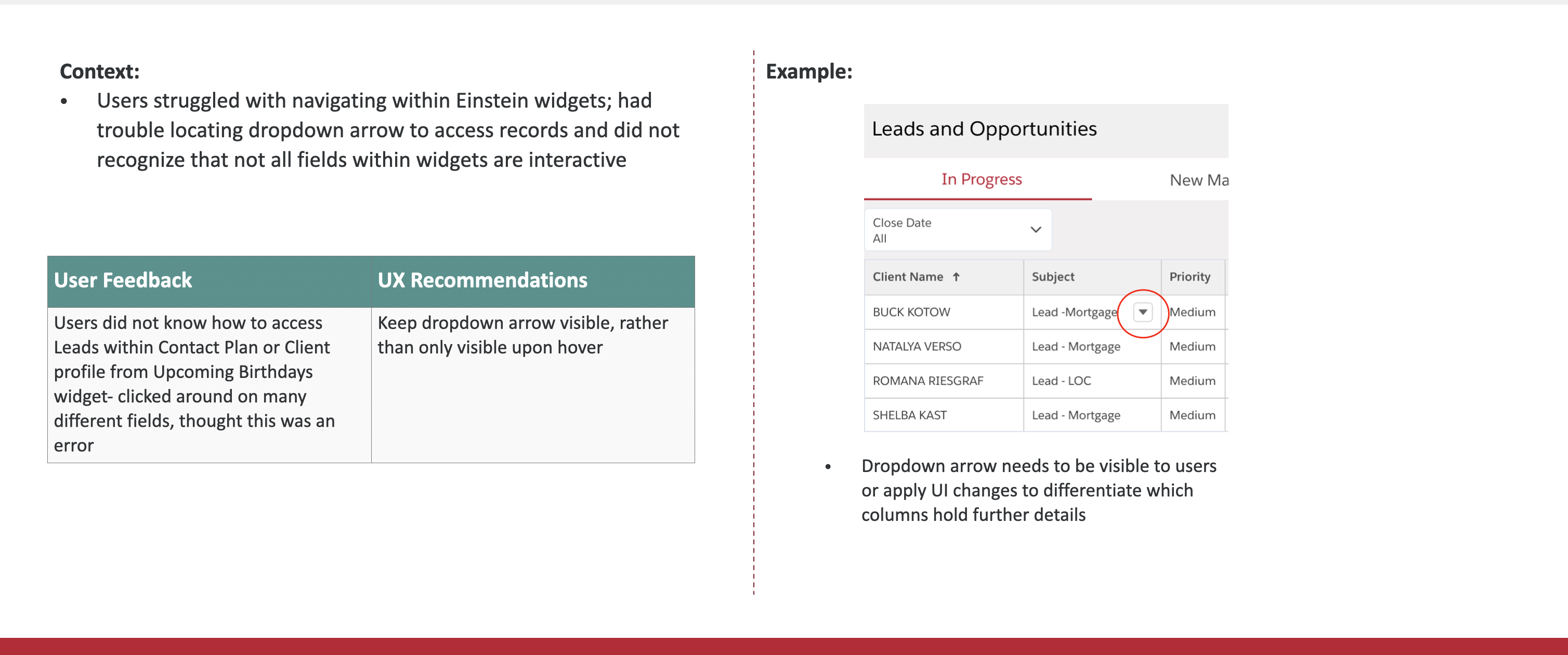
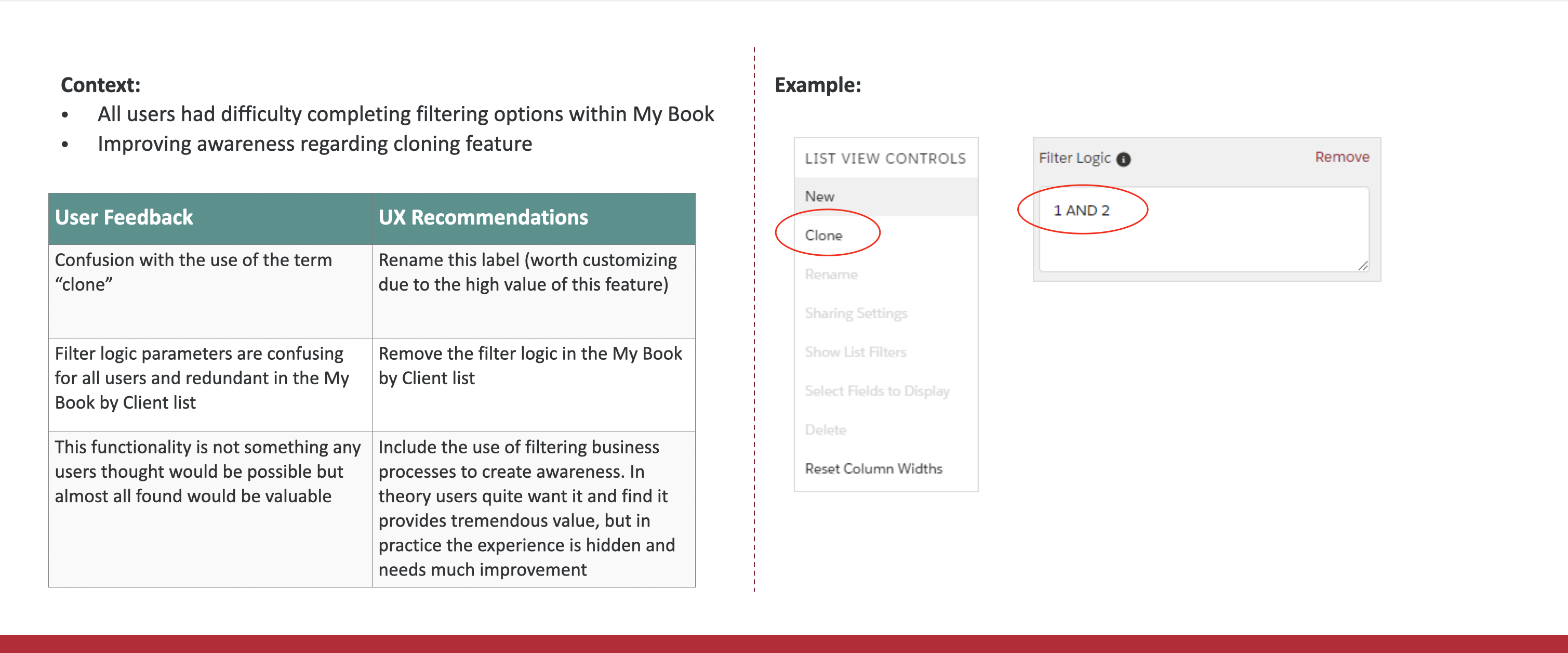
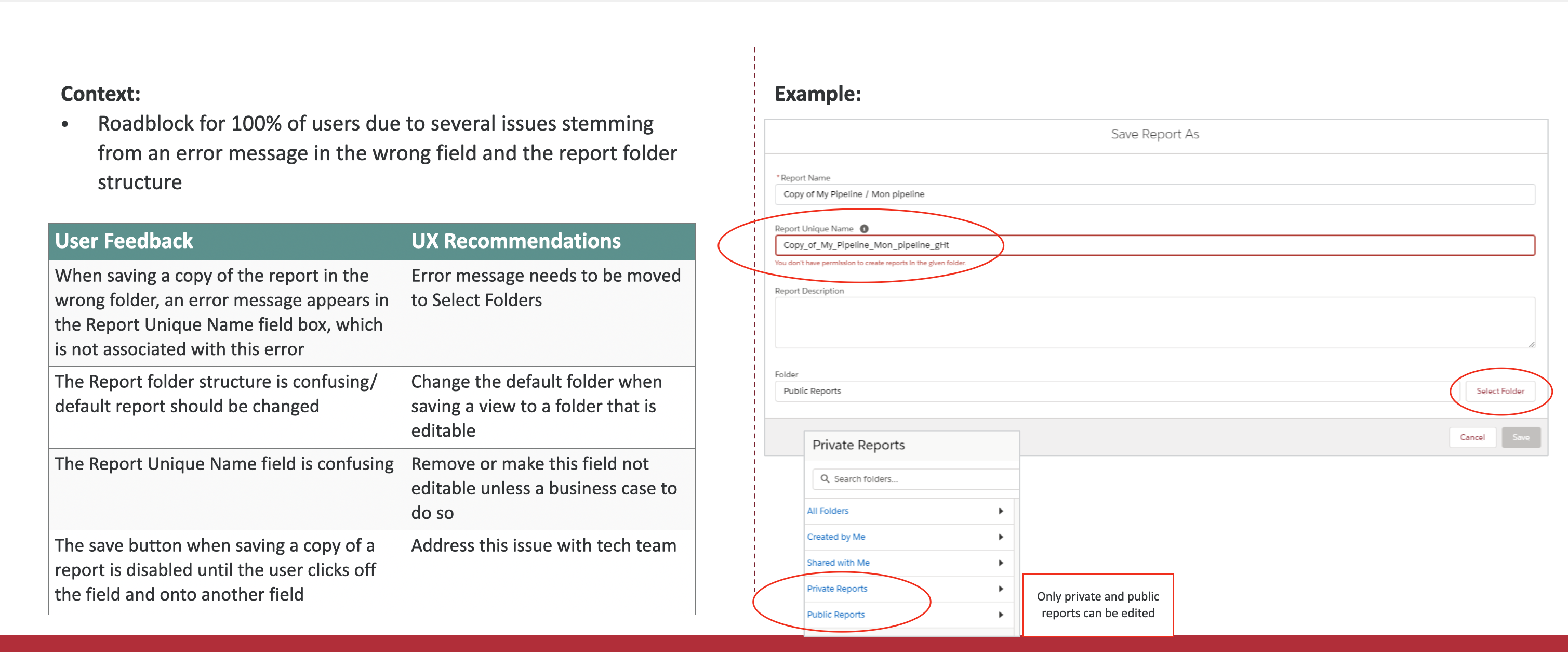
Select UX Research Findings:

UAT Summary
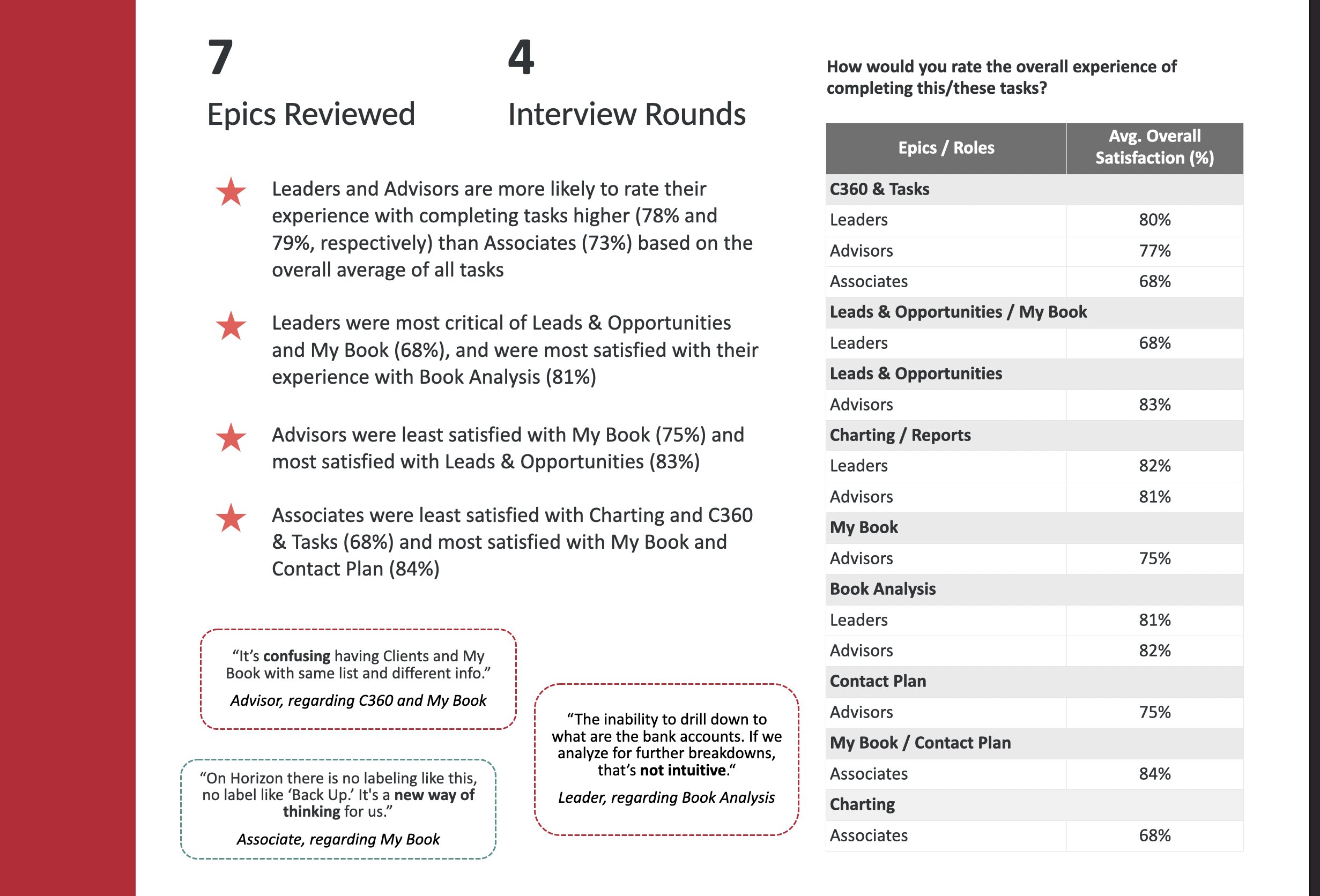
Select UX Research Findings

Select UX/UI Design Recommendations:

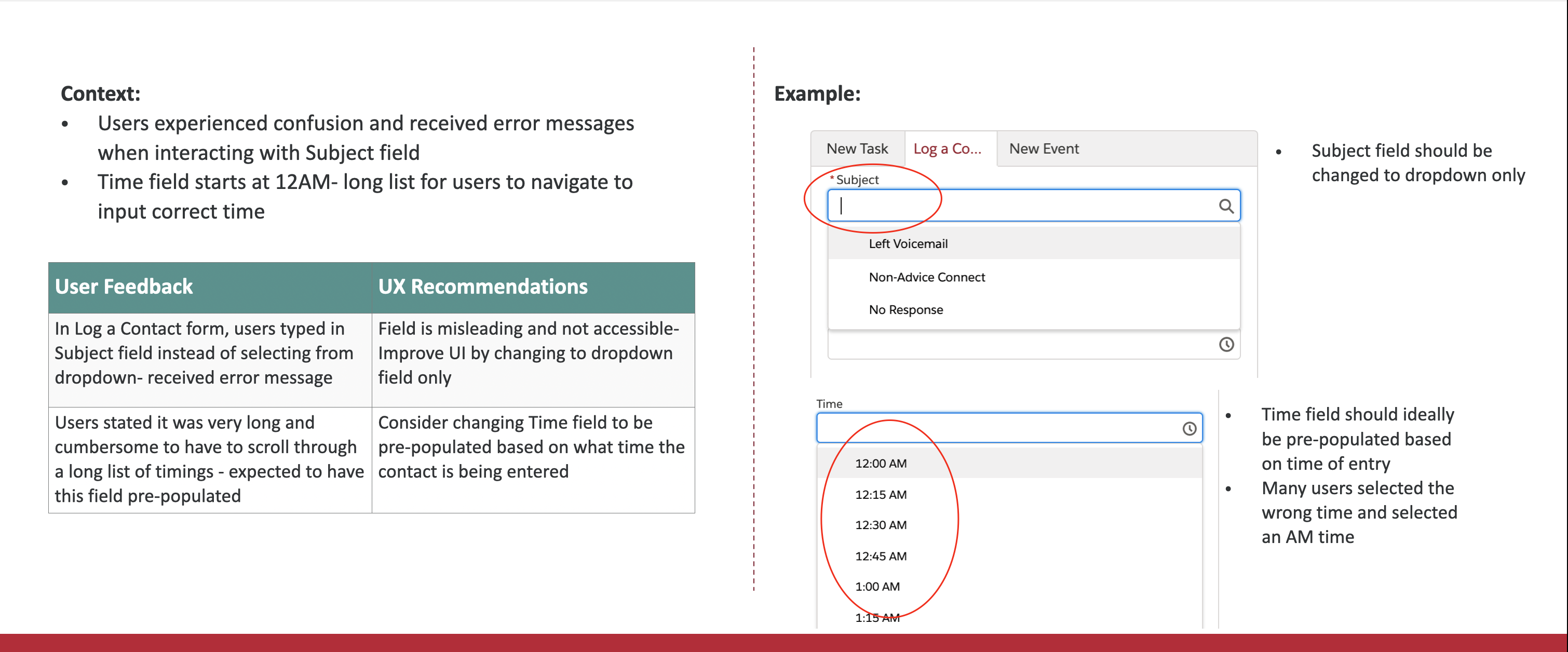
Make required choices clearer by using a dropdown-only Subject field and pre-populating the time, so advisors avoid errors and unnecessary scrolling.

Log a Contact Widget

Impact:

  • Quick fixes based on our findings eliminated bugs and roadblocks, preempting high post-launch user challenges and support call volume, translating to significant time savings
  • Shaped product leaders' prioritization of feature development, elevating the priority of functionalities that users found most useful, thereby ensuring a user-centred product evolution
  • Communicated with the Learning Team to ensure critical user confusions are addressed in training materials, thereby facilitating a more intuitive user onboarding experience
  • Identified inadequacy of the built-in French translations in Salesforce, leading to the pivotal onboarding of a dedicated UX French translator, enhancing the platform's French language support to meet the usability needs for our French-speaking user base
  • Identified user-valued legacy functionalities that were missing in ECRM, as well as flows that were more cumbersome in ECRM than previous platforms, and flagged these as top priorities to address to ensure a smooth transition away from legacy systems and towards adoption of ECRM

STRATEGIC INITIATIVES FOR UX TRANSFORMATION

With the mad rush of the national launch finally behind us, the entire project had a moment to catch its collective breath. At least a little bit. While we continued to march forward into new epics, features, and waves of work, there was a sliver of more space for process refinement. We began undertaking the following strategic initiatives in a constant effort to improve upon and transform UX involvement in the ECRM project:

  • Implementation of Exploratory Research
  • Demonstration of Value: Conducting Proactive Research
  • Expand Influence Through Stakeholder Collaboration
  • Team growth: Building a Full UX Shop
  • Stakeholder Interviews + Education + UX Framework Development
  • Alignment Across Agile Pods
  • Gain buy-in to HIRE UX DESIGNERS!!
  • Creation of CIBC’s Salesforce Design System
  • Transition to SAFe and PI Planning

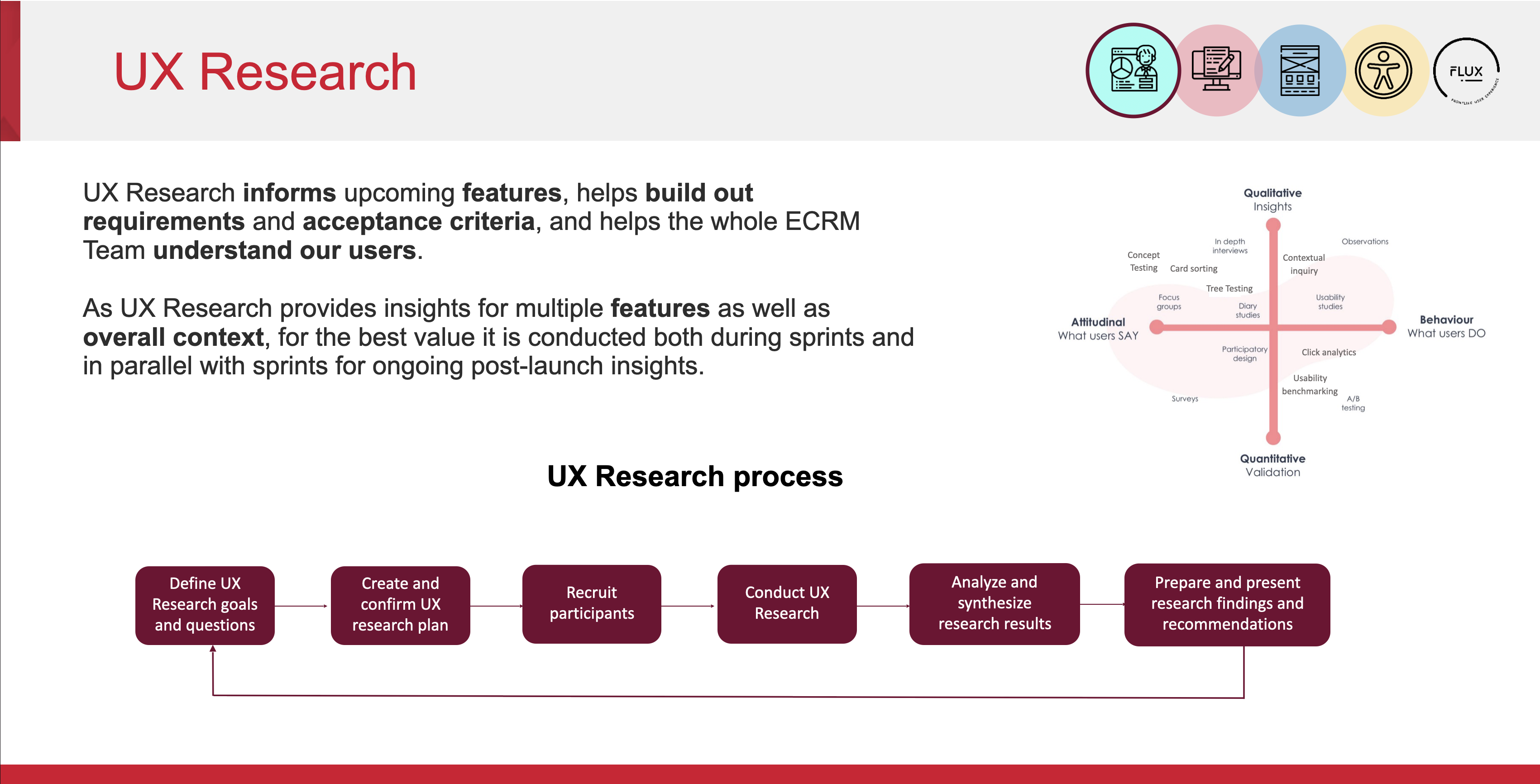
REFINED UX RESEARCH PROCESS

UX Research Execution and Delivery

How the research function fit into ECRM’s wider delivery model.

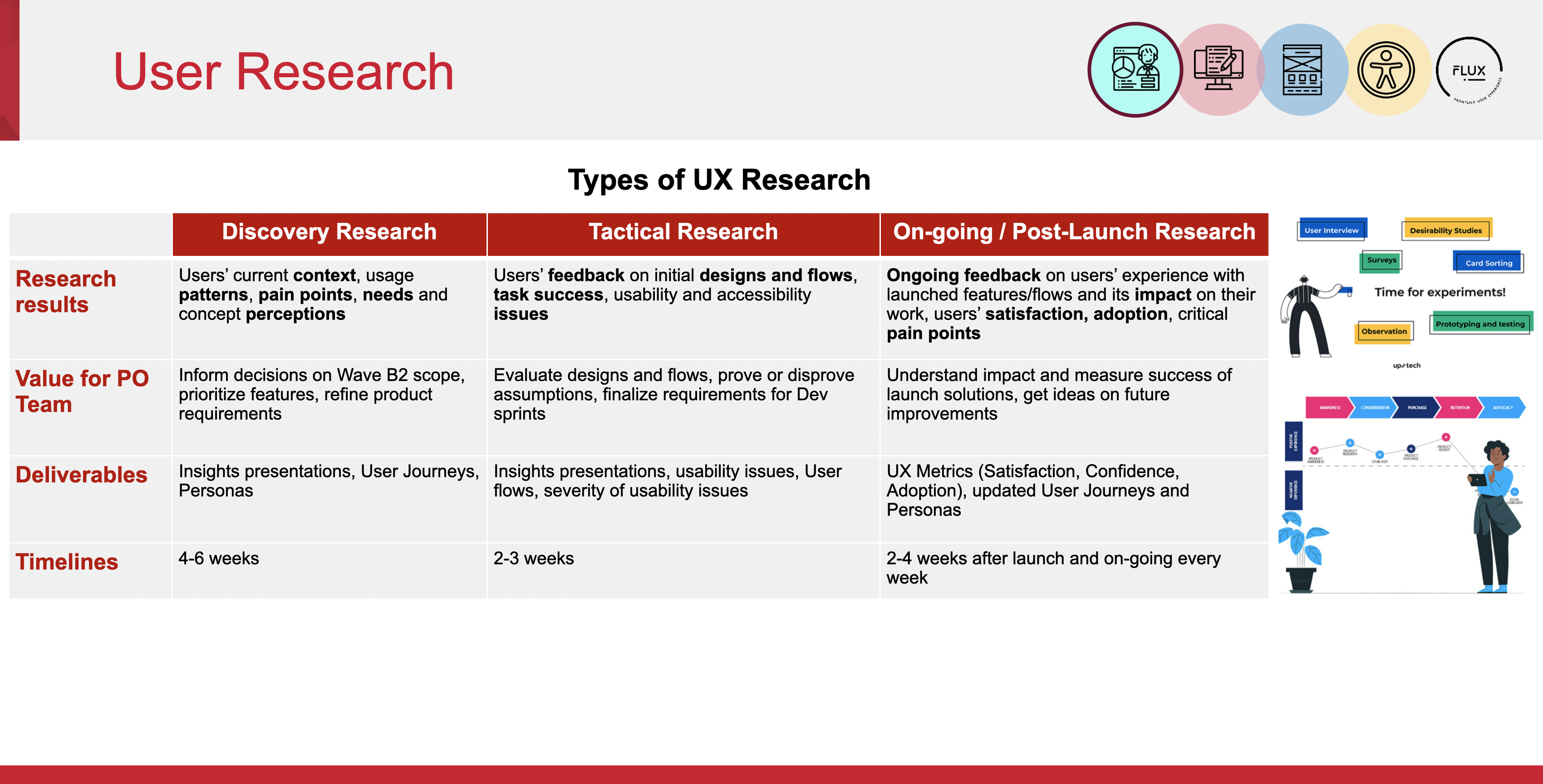
The ECRM UX Research process focused on understanding the user's needs, behaviours, and pain points, and ensuring those considerations were taken into account by the product team. It employed a mix of qualitative and quantitative methods to gather actionable insights. This information was instrumental in influencing prioritization of work, design decisions, business strategies, and overall user experience.

Excerpt from UX Educational Presentation:

Excerpt from UX Educational Presentation

Pre-Discovery

  • Conduct Exploratory Research: Understand the problem space and provide user journeys, personas, and pain points to inform Product team decisions on scope and prioritization

During Roadmap Development:

  • Share Research: Share relevant pre-existing and new research to support decisions and Roadmap Development
  • Identify Research Scope: Identify scope for research based on groomed Epics and User Stories

During Design Sprints:

  • Conduct Evaluative Research: Evaluate idea concepts or mockups created by UX Design
  • Share Usability Insights: Share discovered usability issues and recommendations with UX Design and UX Content

Delivery and Post-Delivery

  • Support Continuous Research: Conduct further exploratory research where needed to inform continuous improvement opportunities
Refined UX Research Process

REFINED UX DESIGN PROCESS

UX Design Execution and Delivery

How the design function fit into ECRM’s wider delivery model.

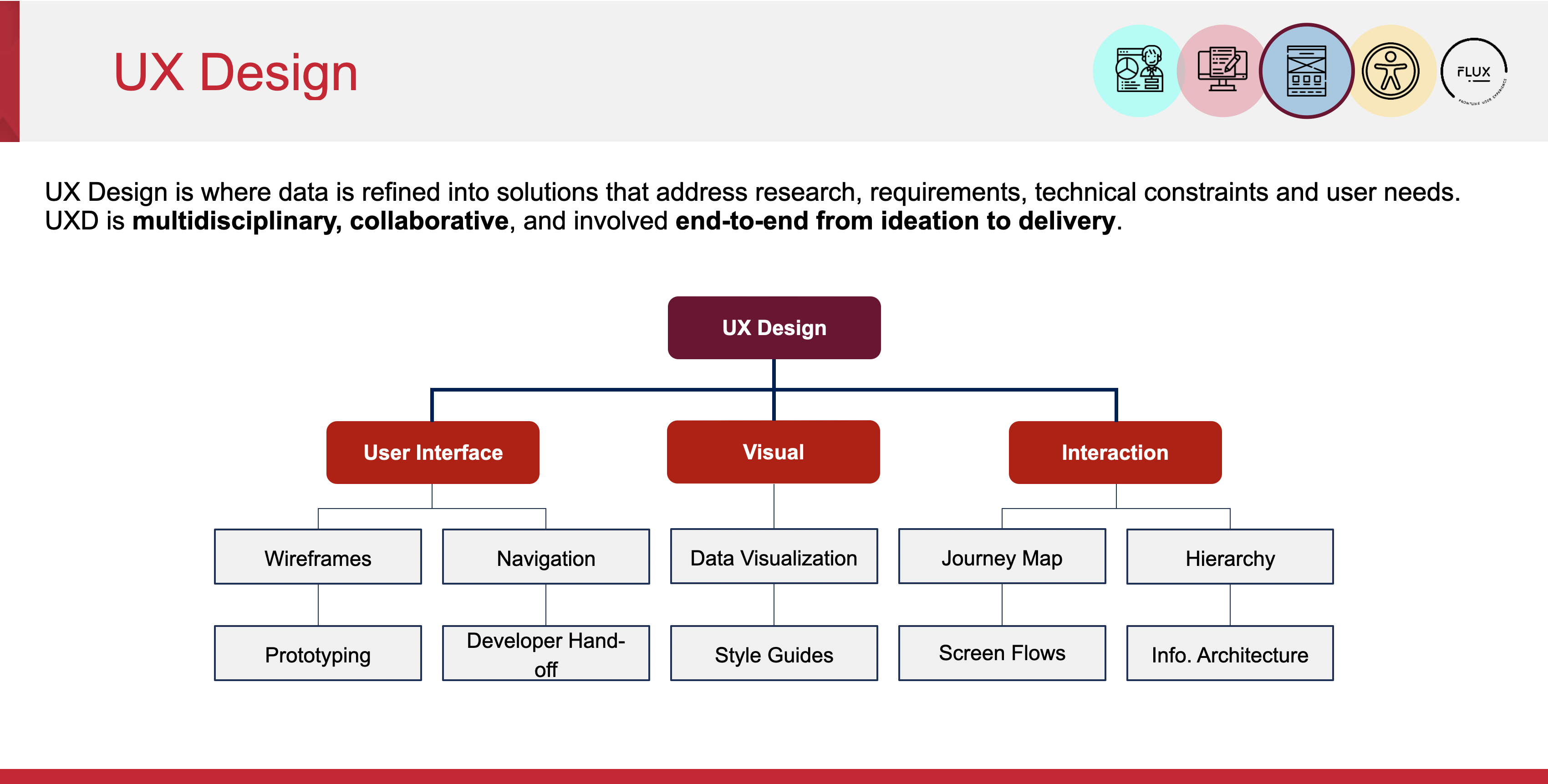
The ECRM UX Design process weaves together user-centric design, collaborative insights, and iterative methodologies. This process ensures that design decisions align with user insights, feasibility checks, accessibility requirements, and business objectives to create an experience, that's user-friendly, technically sound, and benefits the business.

Excerpt from UX Educational Presentation:

Excerpt from UX Educational Presentation

Initiation & Discovery

  • Attend discovery sessions to familiarize with upcoming features.
  • Simultaneously, finalize designs from previous sprints, setting the stage for upcoming design challenges.

Roadmap Development

  • Guide the design direction by referencing groomed JIRA stories and requirements, always keeping an eye on the bigger picture.

Collaborative Wireframing

  • Partner with Business System Analysts and Solution Designers to develop wireframes.
  • This collaboration ensures designs are not only user-centric but also technically feasible.
  • Anticipate challenges, integrate feedback, and pivot designs as needed.

Design Iteration & Sprint:

  • Transform insights into prototypes that prioritize user needs and are visually engaging.
  • Continuously collaborate with UX researchers, incorporating findings from usability tests to enhance designs.
  • Engage with UX Content to ensure that content seamlessly integrates with designs and meets user expectations.
  • Work hand-in-hand with UX Accessibility to ensure all designs are inclusive and compliant with accessibility standards.
  • Offer actionable UX recommendations, prepping designs for the development phase.

Dev Sprint:

  • Gather and assimilate feedback, refining designs to ensure they're ready for the next development steps.
  • Address any emerging constraints, proactively adjusting designs to mitigate potential impacts on the user experience.

Post-Launch Analysis

  • Post-deployment, retrospectively assess designs to gauge their efficacy, and pinpoint areas for potential enhancement based on real-world user interactions and feedback.

Operating model artefacts

How the UX disciplines fit together

These working artefacts show how UX research, design, content, and accessibility connected across delivery—not just the design execution flow above.

REFLECTIONS

Reflecting on this journey, it's evident that while challenges are inevitable, they also present opportunities for growth, learning, and ultimately, the delivery of a product that can truly make a difference. The ECRM project was a testament to the power of collaboration, adaptability, and unwavering dedication to the user experience.

Listed below are just some of the outcomes and lessons learned on this ride in ECRM land!

Outcomes

  • Enhanced User and Client Experiences
  • Recognition of UX's Vital Role
  • Improved Processes and Workflow
  • Fostering of a Collaborative Environment
  • Inception of CIBC’s Salesforce Design System

Lessons Learned

  • Early UX Involvement is Crucial
  • Stakeholder Education is Paramount
  • Flexibility and Adaptability are Key
  • Open Communication Channels

← Back to case studiesNext case studyMaking Digital Bank Branch Experiences Work in the Real World